
Stretch marks — laser treatment
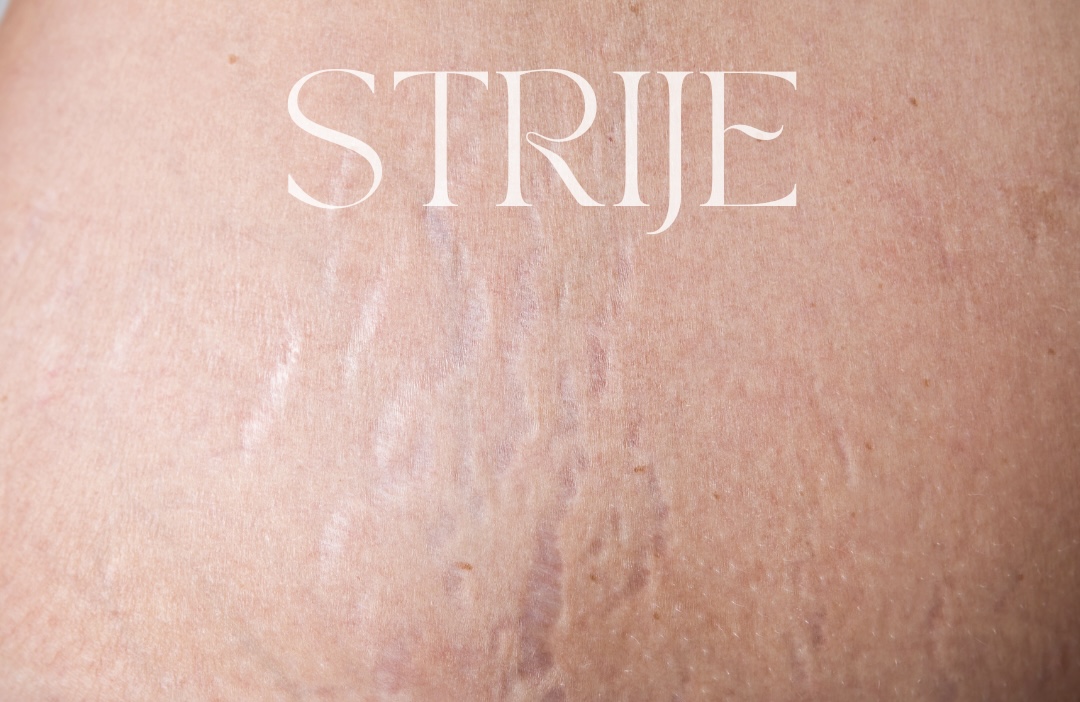
Stretch marks are not "cracks in the skin" in a surface sense. They are a form of scar in the dermis — they form due to the skin stretching too quickly or weakened connective tissue, causing microtears of collagen and elastin.
At CRYSTALIA — Laser Regeneration Institute (part of Poliklinika Kranjčec, Zadar) the approach is regenerative and medical. The goal is not "instant erasing" but the gradual remodelling of the dermis.
1. What are stretch marks and why do they form?
Common causes: rapid growth or a change in body weight, pregnancy, hormonal influences (puberty, endocrine changes), genetics (the quality of collagen and elastin), intensive training and a rapid increase in muscle mass, and, less often, long-term use of corticosteroids.
The most common locations: the abdomen, hips and thighs, gluteal region, breasts, upper arms and lower back.
2. Types of stretch marks — "red" and "white"
Red stretch marks (striae rubrae): fresher stretch marks — often red, pink or purple. The tissue is more active and vascular, so a better response to therapy can usually be achieved in this phase.
White stretch marks (striae albae): older stretch marks — pale, white or "silvery", often with an indented texture. The goal is primarily to improve the texture and integration with the surrounding skin.
In conclusion: red stretch marks usually respond more easily and quickly. White stretch marks can improve, but require more patience and a serial approach.
3. Laser treatment of stretch marks — what it can realistically change
The laser can help improve the texture (less indented, smoother to the touch), reduce the colour contrast (the stretch marks "stand out" less from the surrounding skin), improve the tone and quality of the skin in the area of the stretch marks, and — for fresh stretch marks — reduce redness and "activity".
It is important to say clearly: as a rule, stretch marks cannot be 100% removed. The goal is for them to become considerably less visible and for the skin to behave more evenly.
4. How does the laser act on stretch marks?
The laser approach is based on creating precise microzones of stimulation in the skin, which encourage collagen remodelling, the reorganisation of fibres in the dermis and a gradual improvement in the structure and elasticity of the tissue. Stretch marks are "linear scars" of the dermis, so the therapy is planned as a process — the skin needs time to build a new structure.
Assessment, plan, monitoring.
1. Examination and assessment of the stretch marks
The phase of the stretch marks (red vs. white), depth and width, location and skin quality, phototype and the risk of PIH, previous treatments and skin reactions.
2. An individual plan
The intensity of treatments and intervals, seasonality (UV exposure), realistic goals per series of treatments.
3. A serial protocol and monitoring
Results build gradually and are monitored over time. The parameters are adjusted to the skin's response.
Depending on the age, area and depth of the stretch marks.
Fresh (red) stretch marks.
Older (white) stretch marks.
The number of treatments depends on the age of the stretch marks, the area and depth, the location and skin type, and the phototype and tendency to pigment changes.
7. Recovery after treatment
Most commonly: redness and a feeling of warmth, dryness and skin sensitivity, sometimes flaking or a "bronzing" effect. In areas exposed to friction, it is important to follow the care instructions strictly.
8. Safety and possible side effects
The most common risks: PIH (darkening after irritation) — especially in higher phototypes or with sun exposure, prolonged redness, dryness and irritation, and rarely infection. Photoprotection and post-procedural care are a key part of the plan.
9. Who is a good candidate?
The best candidates are people who want to improve the visibility of stretch marks through a medical plan, have realistic expectations (improvement, not "disappearance") and are ready for a series of treatments and care discipline.
What patients most often ask.
Which stretch marks respond better to treatment?
As a rule, fresh, red stretch marks respond better and faster. White stretch marks can also improve, but more often require more treatments.
Can stretch marks disappear completely?
As a rule, not in the sense of "skin as before". But it is often possible to make stretch marks considerably less visible, with a smoother texture and less contrast.
When will I see results?
Part of the change may be seen after healing, but the key change comes gradually through remodelling — over weeks and months, especially after a series of treatments.
Can I treat stretch marks in summer?
Sometimes yes, but with strict photoprotection and often a more conservative protocol. Stronger treatments are usually safer to do during periods of lower UV exposure.
Are the treatments painful?
It depends on the protocol and region. The goal is a controlled, tolerable treatment with standard methods of reducing discomfort.
Once a month — free consultations.
Once a month we hold a day of free consultations at Crystalia. All patients registered for consultations that day receive:
We analyse your skin, the type of scar or other concerns with a detailed history of past conditions.
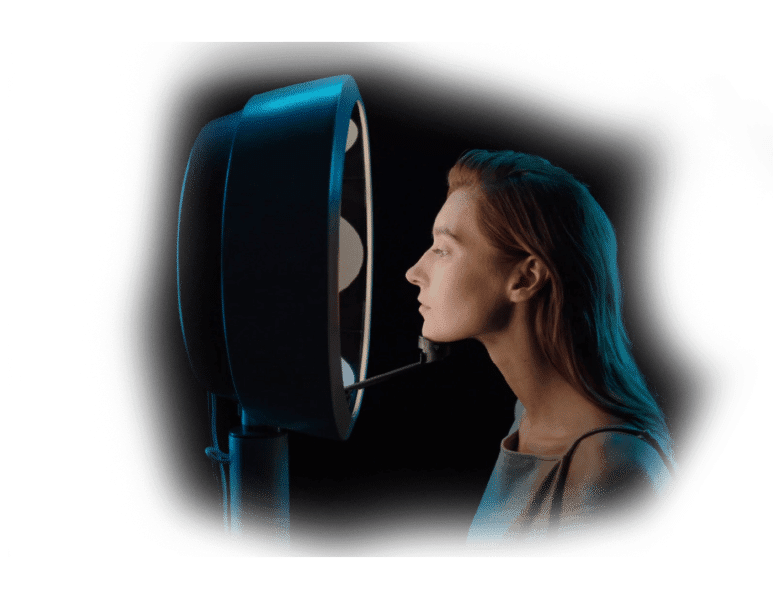
We digitally measure the texture, pigmentation, redness and structure of the skin to see what is often invisible to the eye.
You receive a clear, structured plan — the number of treatments, intervals, realistic expectations and the long-term goal.
Click the category that interests you.
Book a consultation
Crystalia — Laser Regeneration Institute · Postrojbi specijalne policije 5, Zadar · Tel. 023-324-881 · crystalia.institute@gmail.com
Book a consultation →