Laser varicose vein treatment
Laser precision for a faster recovery. Feeling discomfort, tingling or pain in your legs? You may be dealing with dilated or varicose veins. Laser treatment (EVLA) — an elegant and effective solution.
What are varicose veins?
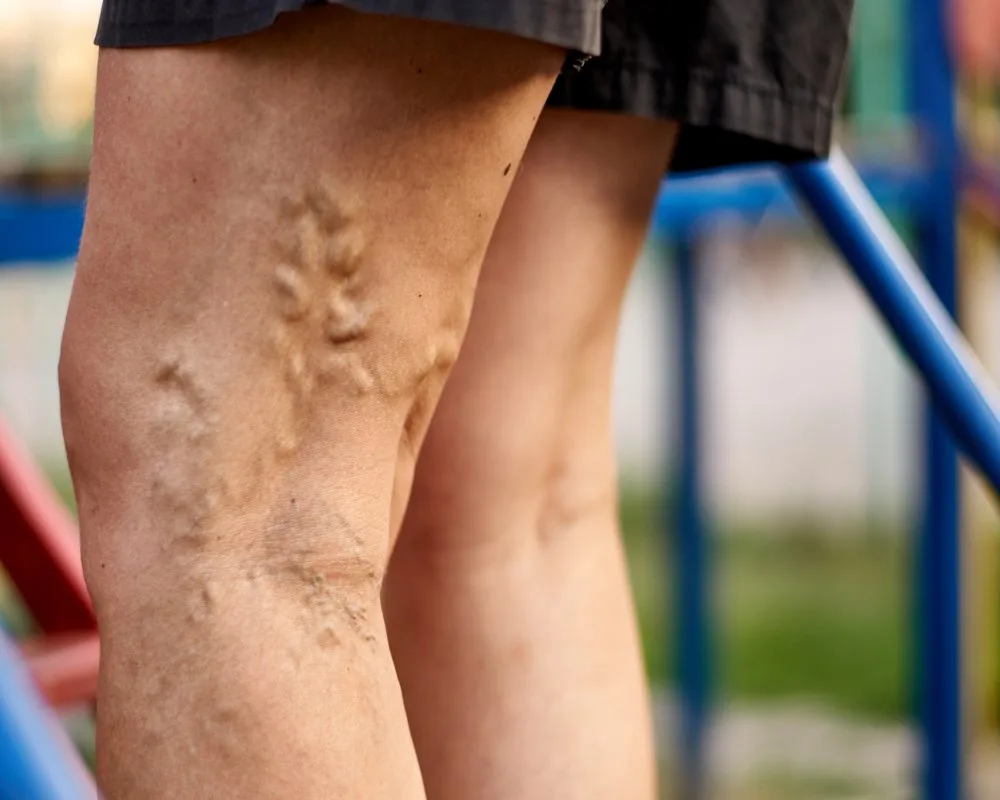
Varicose veins are a common medical condition that occurs when veins become dilated, twisted or tangled. The dilation happens because blood pools in the veins due to insufficient action of the venous valves.
Venous valves act like one-way gates that allow blood to move only upwards — from the legs towards the heart. When they weaken or fail, blood pools, the veins dilate and become visible under the skin.
The procedure (endovenous laser ablation, EVLA) is performed on an outpatient basis, under local anaesthesia — you go home the same day, and most patients return to their usual activities within a few days.
When to see a vascular surgeon.
- Visible skin changes — dark, twisted or bulging veins
- Swelling of the legs (especially the ankles)
- Pain and a feeling of heaviness after prolonged standing or sitting
- Itching or burning around the dilated veins
- Night cramps in the leg muscles
- Skin changes — thinner, dry skin or pigmentation
- Fatigue and inability to stand or walk for long
Nine main risk factors.
A combination of hereditary and lifestyle circumstances — the more of them you recognise, the more important a timely consultation is.
- A hereditary predisposition
- Age (ageing weakens the veins)
- Sex — women are more prone
- Pregnancy
- Prolonged sitting or standing
- Obesity
- Injuries and operations
- Smoking
- High blood pressure
BioLitec Leonardo + ELVeS Radial 2ring Pro.
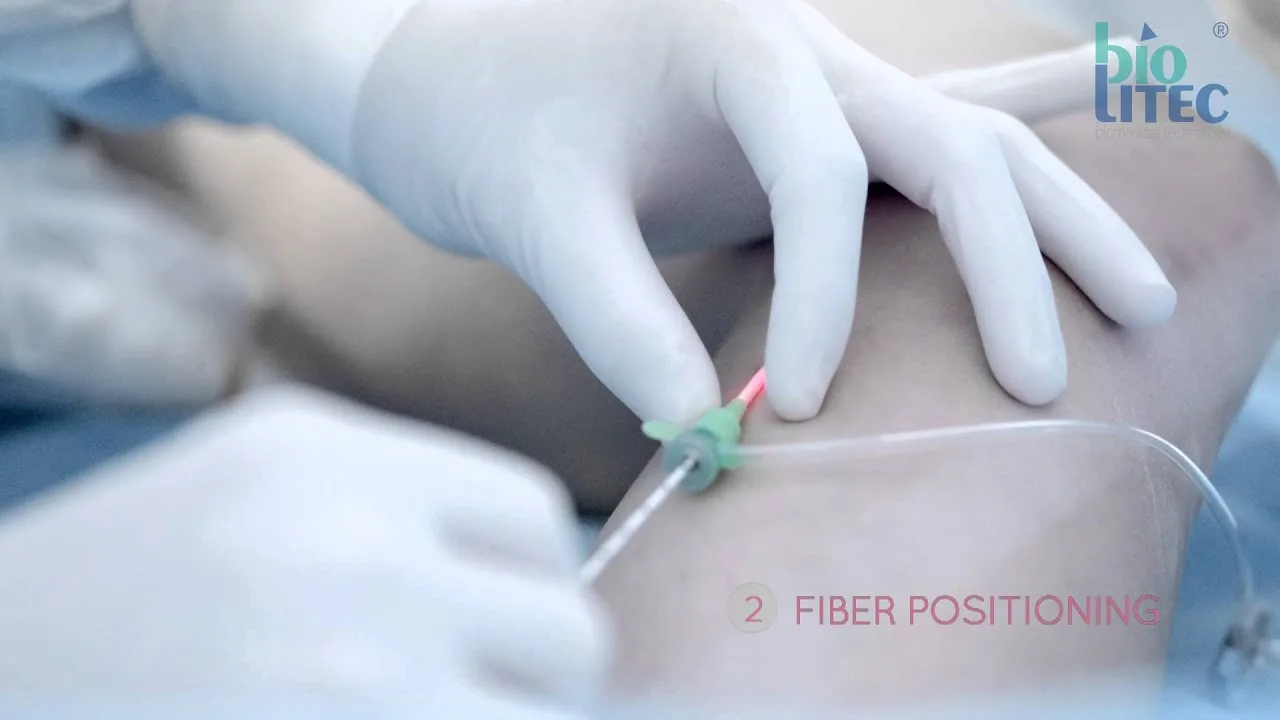
The pinnacle of technology in endovenous laser ablation (EVLA). The ELVeS® Radial® 2ring Pro fibre is one of the most advanced laser fibres for this procedure — uniform thermal action along the entire length of the vein, a predictable result.
Seven steps.
- 01Examination & diagnosis
A physical examination of the veins and a colour Doppler ultrasound to assess the condition.
- 02Preparation
Local anaesthesia at the procedure site — no general anaesthesia.
- 03Inserting the fibre
A small incision and insertion of a thin laser fibre into the dilated vein.
- 04Laser ablation (EVLA)
Thermal closure of the vein under ultrasound guidance.
- 05Completion
Removal of the fibre and application of a compression bandage.
- 06Recovery
You go home the same day; avoid exertion for the first few days.
- 07Results
Visible improvement over the following weeks and months.
Six reasons to choose EVLA over conventional surgery.
Precision
Targeted closure of the dilated vein under ultrasound guidance.
Minimally invasive
An outpatient procedure without cutting into deep tissue.
Lower risk
Fewer infections, less tissue damage and scarring.
Faster recovery
Less trauma — less pain and swelling.
Less bleeding
Precise closure without significant bleeding.
Outpatient
No hospitalisation, a quick return to everyday activities.
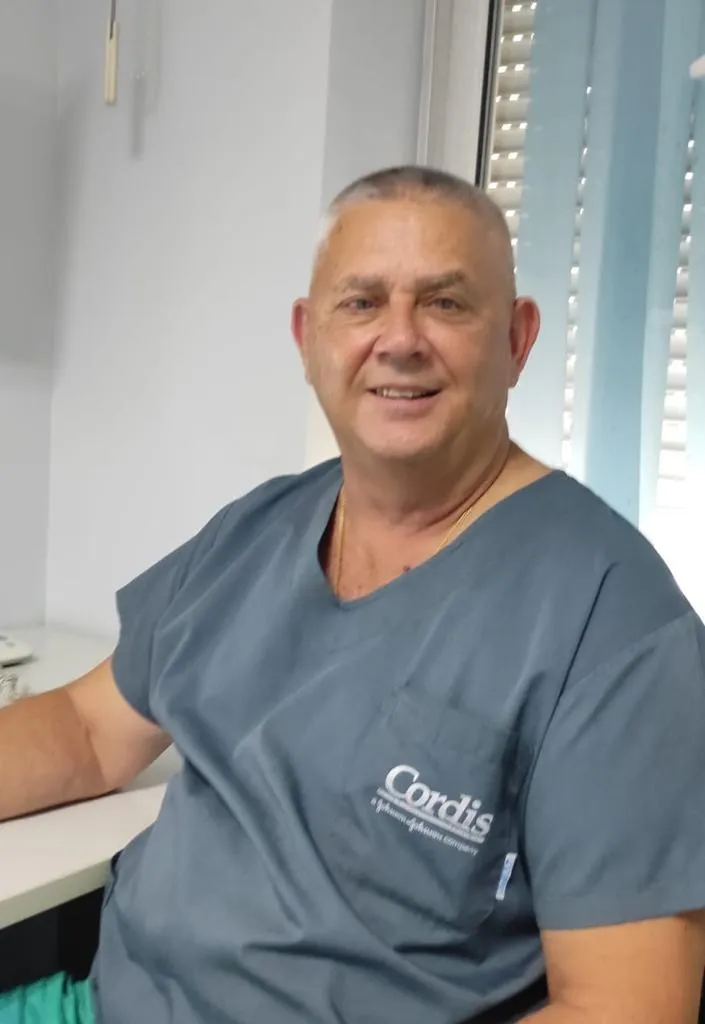
Dr. Davor Padelin — vascular surgeon in Zadar
General surgery specialist · subspecialist in vascular surgery
Rich experience in vascular surgery and a dedicated approach to patients. He uses the BioLitec Leonardo laser with the ELVeS Radial 2ring Pro fibre for predictable results.
Medically reviewed by: Dr. Davor Padelin, general surgery specialist, subspecialist in vascular surgery · Content last reviewed:
Laser varicose vein treatment — common questions.
Does laser varicose vein treatment (EVLA) hurt?
The procedure is performed under local anaesthesia, so you feel no pain during it. As it is a minimally invasive method without large incisions, pain and discomfort afterwards are considerably less than with conventional vein surgery.
What anaesthesia is used?
EVLA is performed under local (tumescent) anaesthesia — no general anaesthesia. This shortens preparation and recovery and allows you to go home the same day.
How long is recovery?
It is an outpatient procedure after which you go home the same day. Most patients return to their usual activities within a few days, avoiding greater exertion in the first days.
Do I have to wear compression stockings after the procedure?
Yes. After EVLA a compression bandage is applied, and wearing compression stockings for a certain period is then recommended — this supports healing and reduces swelling. Your surgeon determines the duration.
Can varicose veins come back after treatment?
The treated vein closes permanently, but new varicose veins can appear over time, especially with a hereditary predisposition. Regular physical activity, maintaining a healthy weight and avoiding prolonged standing reduce the risk.
Do I need a referral and how do I book?
No referral is needed — the examination (including a colour Doppler ultrasound) and the procedure are carried out privately, without waiting. You book directly by phone at +385 23 324 881 or via the booking form.
Give your legs relief. Without major surgery.
Tel. +385 23 324 881 · E-mail: poliklinika.kranjcec@gmail.com
Book an appointment →