

Hypertrophic scar — laser treatment
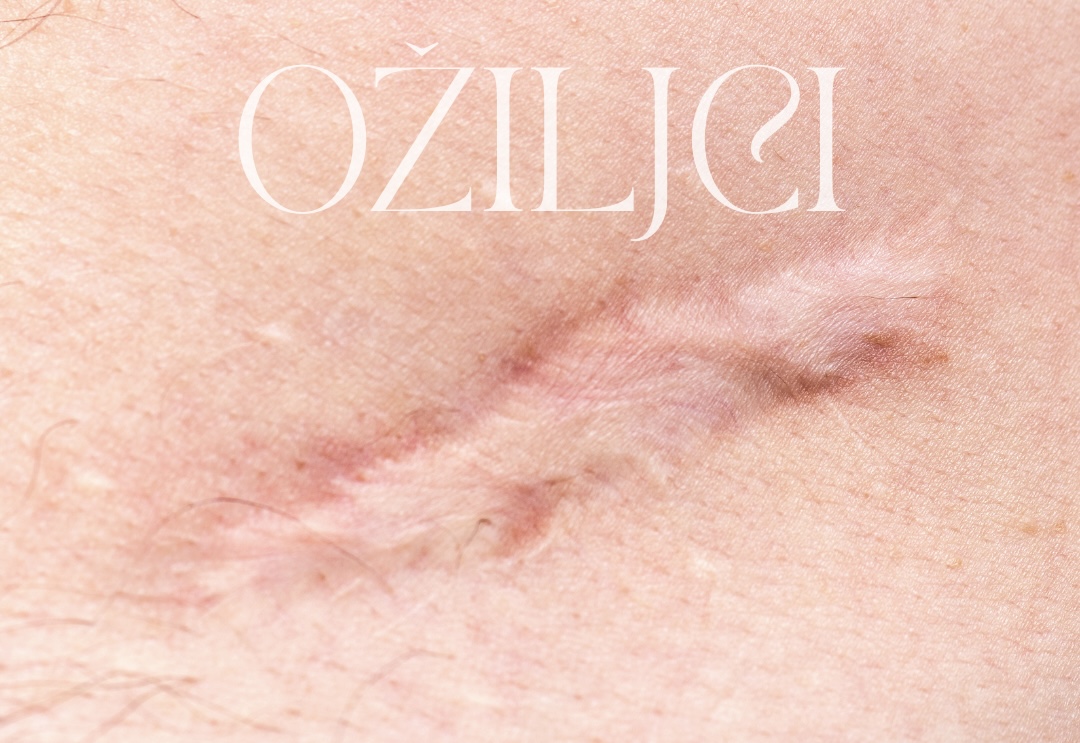
A hypertrophic scar is a raised, thickened scar that forms due to increased collagen production during healing. Unlike a keloid, it stays within the boundaries of the original wound — and that is the key difference that changes the treatment plan.
At CRYSTALIA — Laser Regeneration Institute (part of Poliklinika Kranjčec, Zadar) we treat hypertrophic scars as active scar tissue that can be guided through properly timed, medically controlled protocols. The goal is to reduce thickening, redness and hardness and to improve the elasticity and transition of the scar into the surrounding skin.
1. What is a hypertrophic scar and how do you recognise it?
The most common characteristics: the scar is raised and thickened, often red in the early months, may be hard, tense and sensitive, sometimes itches or burns, and does not cross the boundaries of the original wound.
Hypertrophic scars often appear after: surgical incisions, traumatic wounds, burns and (less often) inflammatory processes on the skin.
2. Hypertrophic scar vs. keloid: the key difference
A hypertrophic scar stays within the boundaries of the wound, often partially calms over time and responds better to controlled treatment protocols. A keloid grows beyond the boundaries of the wound, can keep growing for years and has a higher risk of recurrence — it requires a more cautious approach. If there is doubt, we first make a clinical assessment and only then a plan.
3. Why does a hypertrophic scar form?
The most common risk factors: skin tension at the wound site (shoulders, chest, back), prolonged healing, infection or inflammation, mechanical friction and micro-movements (clothing, joints), genetics and individual predisposition, and UV exposure in the early healing phase. That is why two scars of the same length can look completely different.
4. What can be improved with treatment?
The goals of therapy are measurable and realistic: reducing the height and volume of the scar, softening the tissue (less hardness and tension), reducing redness and vascular activity, improving the elasticity and mobility of the skin, and a better transition of the scar into the surrounding skin (a less "visible line").
5. When is the best time for therapy?
A hypertrophic scar is dynamic — in the early phases it can be highly active, and over time it moves into a more stable phase. General principles: we do not treat aggressively until the wound is completely healed; if the scar shows signs of hypertrophy (raised, hard, prolonged redness, itching), an early assessment is useful; with older scars, therapy is possible but sometimes takes more time and sessions.
A clinical assessment, then an individual plan.
1. Clinical scar assessment
Whether it is a hypertrophic scar or a keloid; activity (redness, itching, pain, growth); hardness, elasticity and skin tension; location (high risk: chest, shoulders, back); phototype and the risk of post-inflammatory hyperpigmentation (PIH).
2. An individual plan in phases
The goal (height, hardness, colour, symptoms); intervals between treatments; a care and photoprotection protocol; monitoring over time — because the scar changes over months.
It depends on the age, location and activity of the scar.
Milder hypertrophic scars.
More pronounced and active scars — a longer plan in phases.
Scars after burns — more demanding tissue.
8. Recovery and what to expect
Most commonly: transient redness and warmth, sensitivity and dryness, sometimes mild flaking. In areas of friction (waistband, clothing), care instructions are especially important.
9. Safety and possible side effects
The most common risks: PIH (darkening after irritation) — especially in higher phototypes and with UV exposure, prolonged redness, irritation and sensitivity, and rarely infection if care instructions are not followed. The goal is to dose the therapy so that it reduces activity, rather than provoking an excessive reaction.
10. Who is a good candidate for therapy?
A hypertrophic scar is a good candidate if it is raised, hard or red, there is itching or discomfort, the scar tightens or is aesthetically bothersome — and if you want a medical plan with realistic goals and monitoring. A history of keloids is important information, as the plan can then be more conservative.
What patients most often ask.
Will a hypertrophic scar go away on its own?
Some hypertrophic scars may partially calm over time, but thickening, hardness or visibility often remains. Therapy can speed up and improve the remodelling.
How do I know if the scar is a keloid?
A keloid crosses the boundaries of the wound and has a greater tendency to grow. A hypertrophic scar stays within the boundaries. We assess this definitively at the examination.
Can the scar be completely flattened?
The goal is a significant reduction in height and an improvement in elasticity, but a "100% disappearance" is not a realistic promise. Most often we achieve a scar that becomes considerably less visible and softer.
Can I treat the scar in summer?
Sometimes yes, but with strict photoprotection and a more cautious protocol. UV exposure increases the risk of pigment changes.
Once a month — free consultations.
Once a month we hold a day of free consultations at Crystalia. All patients registered for consultations that day receive:
We analyse your skin, the type of scar or other concerns with a detailed history of past conditions.
We digitally measure the texture, pigmentation, redness and structure of the skin to see what is often invisible to the eye.
You receive a clear, structured plan — the number of treatments, intervals, realistic expectations and the long-term goal.

Click the category that interests you.
Book a consultation
Crystalia — Laser Regeneration Institute · Postrojbi specijalne policije 5, Zadar · Tel. 023-324-881 · crystalia.institute@gmail.com
Book a consultation →