

Surgical mole removal
Mole removal by a plastic surgeon — specialised excision procedures with histopathological analysis. A focus on health and aesthetics, with a minimal scar.
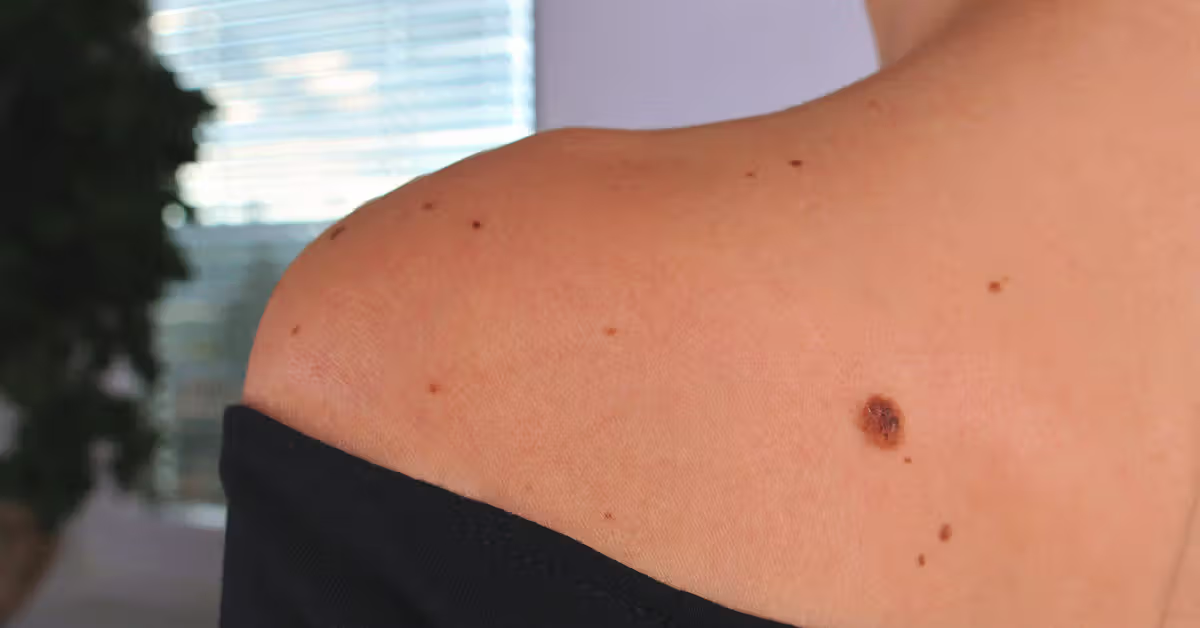
What are moles and why is it important to remove them?
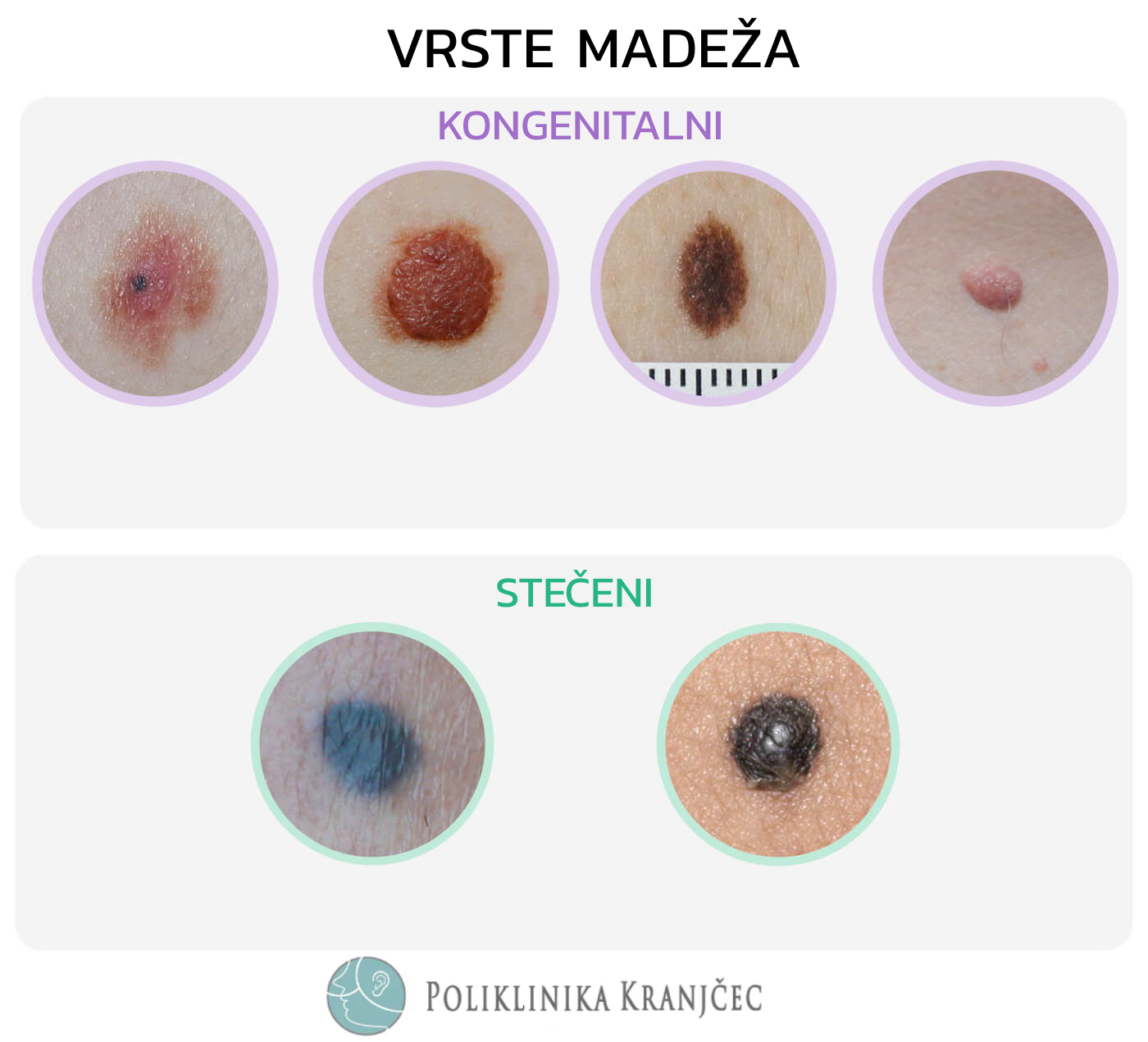
Moles (naevi) are pigmented skin lesions that may be present from birth or develop during life. Most are harmless, but early detection and removal of suspicious moles is key to preventing melanoma.
Six signs to seek a consultation.
Changes in moles are not always malignant, but they require an expert assessment. Do not delay a consultation if you recognise any of these signs.
- A mole that grows, changes shape or colour
- A mole that bleeds, itches or is painful
- An aesthetically unwanted mole on a visible part of the body
- A mole with asymmetry or irregular edges (ABCDE)
- A pigmented lesion larger than 6 mm in diameter
- Any new mole after the age of 40
Fast, safe, under local anaesthesia.
Surgical mole removal at Poliklinika Kranjčec is performed quickly and safely using local anaesthesia. The process includes excision, careful suturing and mandatory histopathological analysis to ensure an accurate diagnosis and complete removal to healthy margins.
A painless experience, without the need for general anaesthesia.
Every removed mole is sent for histopathology.
Back to everyday life the same day.
Why a surgeon, not a laser?
Surgical excision with histopathological analysis is the only proper way to remove a mole — it allows complete removal of the suspicious tissue to healthy margins and a precise diagnosis.
Laser treatment does not allow tissue analysis — parts of potentially malignant tissue invisible to the naked eye may remain. That is why the laser is recommended only for definitely benign, aesthetically unwanted lesions.
Laser removal of skin lesions →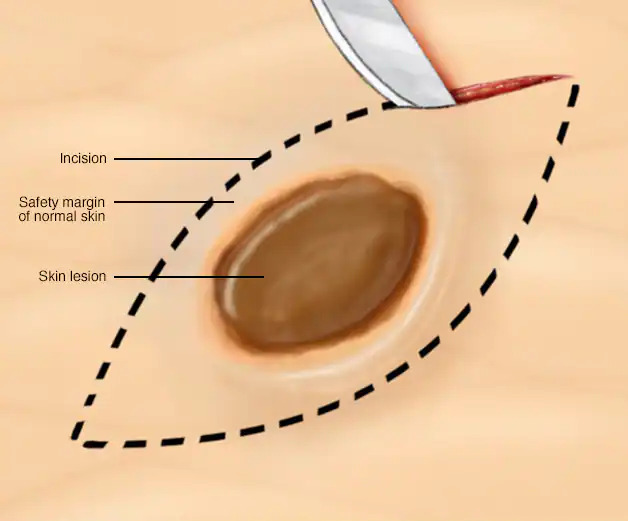
Four reasons to choose Poliklinika Kranjčec.
Plastic surgeons' experience
Specialised in mole excision and precise skin reconstruction.
A minimal scar
The direction of the incision is planned along the skin's natural tension lines.
Histopathological analysis
Every removed mole is sent for histopathology — a safe and precise diagnosis.
Aftercare
Monitoring and scar care throughout the entire healing process.
Medically reviewed by: Dr. Zoran Kranjčec, ENT specialist · subspecialist in head and neck plastic surgery · Content last reviewed:
Mole removal — common questions.
Does surgical mole removal hurt?
No. The procedure is performed under local anaesthesia, so it is painless — you only feel the prick of the anaesthetic at the start. General anaesthesia and hospitalisation are not needed.
Does mole removal leave a scar?
The goal is a minimal, inconspicuous scar. We plan the incision along the skin's natural tension lines, with careful suturing. Proper care during healing further reduces the scar's visibility.
Why is every removed mole sent for histopathological analysis?
Histopathological analysis is the only reliable way to confirm that a mole is benign and that it has been removed to healthy margins. That is why every mole removed at Poliklinika Kranjčec is always sent for histopathology.
Is surgical or laser mole removal better?
For suspicious moles, surgical removal is better because it is the only method that allows tissue analysis. Laser treatment destroys the lesion and does not allow histopathology, so it is recommended only for definitely benign, aesthetically unwanted lesions.
How long is recovery after the procedure?
The procedure is outpatient — you go home the same day and return to everyday activities immediately. A short period of wound care and scar monitoring during healing follows.
Do I need a referral for a mole examination?
No. As a private polyclinic we see patients without a referral and without long waiting lists — simply book by phone or e-mail.